
How it works
One piece of work,
followed the whole way through
Rather than five abstract stages, here is one real run. A finance lead asks for the overdue invoices to be chased, and this page is every step between that sentence and the record they read afterwards.
Beat one
The ask, in the words you would use with a colleague

“Chase everyone who has not paid since June. Anything over five thousand, ask me first.”
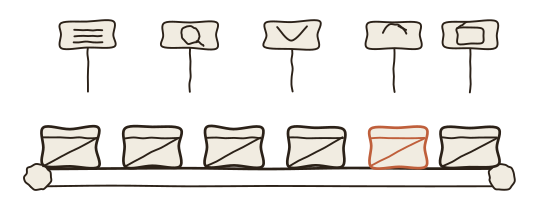
You do not pick the app and you do not name the action. You say what you want done, and it works out which action in which app does that.
That is harder than it sounds. The list of things it could do is far longer than any assistant can hold in mind while it also does your work, and every app names the same idea differently.
So it asks for the few actions that fit what you said, reads exactly what each one needs, and fills the rest in itself. When your sentence is genuinely ambiguous, it asks which one you meant rather than guessing.
Beat two
The plan comes back before anything happens
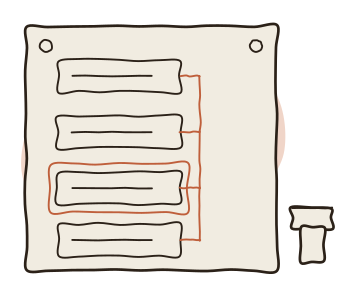
Work this size does not just start. What comes back first is the shape of it: the unpaid invoices it found, a reminder drafted against each customer’s own history, what the run will cost, and nothing sent.
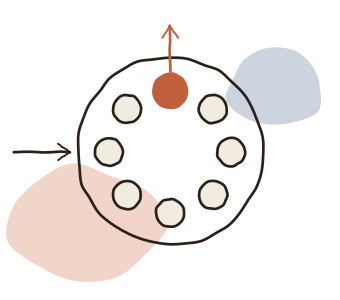
You can also rehearse it. A rehearsal reads your accounts for real, because a rehearsal against an empty room tells you nothing, and it works out every change instead of making one.
The rehearsal uses nothing up. It does not spend the permission the real run still needs, so you can rehearse the frightening version of a request as many times as you want, then run it once.
Beat three
Your rules are checked before the key comes out
Your limits are read first: before the password comes out of the locked store, and before anything reaches Stripe or Gmail. If the answer is no, nothing was opened, nothing was sent, and nothing was spent.
The order is what makes the limits worth writing. A limit checked after the work has happened is a report about it. A limit checked before the key leaves the store is a limit.
The five-thousand line from the ask lands here, along with anything you set once and forgot: what it may spend in a day, which apps it may reach at all, what may leave the company.

Beat four
It works, for as long as the work takes
Now it runs. It reads each unpaid invoice, writes each reminder, and keeps to the pace Stripe and Gmail allow, so a big run does not get itself throttled halfway.
This is more than fits in one conversation, and it outlives one. It keeps its place as it goes: if the machine restarts, it starts again from the place it reached rather than from the beginning, and a crash does not send anything twice.
Your assistant never holds the password through any of it. It holds a claim ticket, and the store does the opening.
Beat five
The ones you wanted a say on wait for you
Four invoices are over five thousand. They stop and wait, and the rest of the run carries on rather than halting on the first thing it is unsure about.
What waits for you is a short list, each with what it would do and why it stopped. You release the ones you agree with. The person who asked for the work cannot be the person who approves it, which is what makes the approval worth having.
Beat six
The record is what you read afterwards

Every action lands in the record as it happens: what ran, what changed, what was skipped and why, and what is still waiting on a person. Partial work says it is partial, so a run that got two thirds of the way never reads as a finished one.
Nothing here is allowed to do the work and skip the write. That is why the record is the whole story rather than the parts that went well, and why you can answer the question a week later.
Two minutes at the start, two at the end. The same six beats hold for any of the other things you would hand over; only the apps change.